
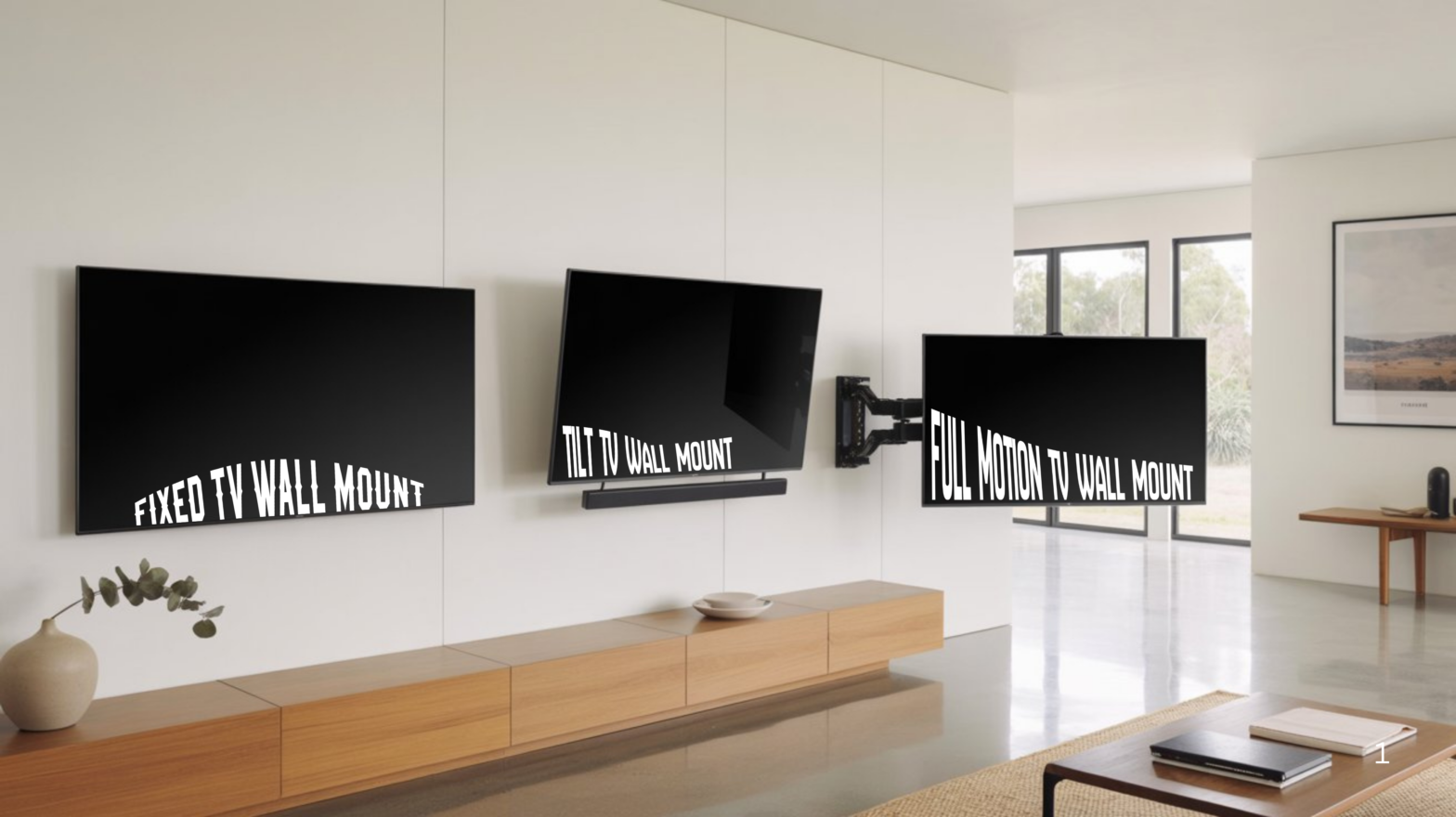
Fixed, Tilt, or Full Motion? Best TV Wall Mounts for Aussie Homes in 2026
Choosing the Right TV Mount in 2026
If you’re mounting your TV this year, you’ll quickly realise one thing: not all TV wall mounts are created equal.
The type of mount you choose dramatically impacts your viewing comfort, room aesthetics, safety, and even the lifespan of your TV.
With Australian homes getting smarter, slimmer, and more design-focused, picking the right wall mount is more important than ever.
In 2026, three mount types dominate the market:
- Fixed TV Mounts
- Tilt TV Mounts
- Full-Motion (Articulating) TV Mounts
Each serves a different purpose and suits different styles of living.
Let’s break down what works best for Aussie homes.
Fixed TV Wall Mounts — Simple, Secure & Sleek
Best for:
- Minimalist homes
- Small to medium rooms
- Eye-level TV viewing
- Home theatres
- People who want a flush-to-wall look
Fixed mounts are the most common and affordable option. They hold your TV flat against the wall, usually just 10–30 mm from the surface, giving a sleek and clean appearance.
Why Aussies Love Fixed Mounts in 2026?
Ultra-slim design
Cheapest option
Extremely secure
Perfect alignment for media-feature walls
Works well with LED backlighting
When to Avoid a Fixed Mount?
- Your TV is placed high on the wall
- You need to reduce glare
- You want multi-angle viewing
- Your seating layout isn’t centred
If the TV isn’t at perfect eye level, tilt or full-motion is a better pick.
Tilt TV Wall Mounts — Reduce Glare & Improve Viewing Comfort
Best for:
- Bedrooms
- Living rooms with high TV placement
- Rooms with bright windows or lights
- Households where viewers sit at different heights
Tilt mounts allow the TV to angle downward (usually 5–15°), making them ideal when the TV needs to be mounted higher than eye level.
Why Australians Prefer Tilt Mounts in 2026:
Helps reduce glare from sunlight
Great for reflective screens (OLED/QLED)
Comfortable viewing in bed or on recliners
Better ergonomics when TV is mounted high
Popular in:
- Apartments
- Homes with tall entertainment walls
- Bedrooms with wall-mounted TVs
Tilt mounts also help with ventilation, reducing heat buildup behind the TV.
Full-Motion TV Mounts — Maximum Flexibility
Best for:
- Corner mounting
- Open-plan living spaces
- Families with multiple seating positions
- Gamers and home theatre lovers
- People who want to pull the TV out for cleaning
Full-motion (also called articulating) mounts can:
- Extend outward from the wall
- Rotate left & right
- Tilt up & down
- Swivel for wide-angle viewing
Why Full-Motion Mounts Are Trending in 2026?
Perfect for Aussie open-plan living
Great for kitchens + living room combo areas
Eliminates neck strain
Ideal for reducing window glare
Makes TV maintenance easier
These mounts adapt to your lifestyle instead of locking your TV into a fixed position.
Most common in:
- Large family rooms
- Corner TV setups
- Homes with multiple sofas
- Media rooms
- Luxury apartments
The only downside?
They’re more expensive and sit further from the wall compared to fixed mounts.
Which Mount Is Best for You? (Quick Comparison)
| Feature | Fixed Mount | Tilt Mount | Full-Motion Mount |
| Cost | ★★★★★ (cheapest) | ★★★★☆ | ★★★☆☆ (premium) |
| Viewing Flexibility | ★☆☆☆☆ | ★★★☆☆ | ★★★★★ |
| Glare Reduction | ★☆☆☆☆ | ★★★★☆ | ★★★★★ |
| Aesthetics | ★★★★★ | ★★★★☆ | ★★★☆☆ |
| Ease of Use | ★★★★☆ | ★★★★★ | ★★★☆☆ |
| Space Saving | ★★★★★ | ★★★★★ | ★★★☆☆ |
| Best For | Eye-level setups | High TV placements | Open-plan + corner setups |
Mount Type Based on Room Setup
Living Room
If your living room has a centred seating area → Fixed or Tilt
If it’s an open-plan space → Full Motion
Bedroom
TV is usually higher → Tilt
Home Theatre Room
Perfect alignment matters → Fixed
Commercial Spaces / Offices
Multiple viewing areas → Full Motion
Apartments
Minimalist interiors → Fixed or Tilt
Corner Installations
Only one winning option → Full Motion
TV Size & Weight Considerations
Mount type depends on your TV’s dimensions:
- Small TVs (32–55 inches): All mount types work
- Medium TVs (55–75 inches): Fixed and tilt recommended
- Large TVs (75–95 inches): Full-motion requires a heavy-duty bracket
- Ultra-large 100-inch displays: Custom or reinforced mounts only
Always choose a mount with weight capacity higher than your TV’s weight.
Wall Types in Australian Homes — What You Need to Know
Different mounts behave differently depending on the wall type:
Plasterboard Walls
Supports all mounts with stud detection.
Full motion may require reinforcement.
Brick & Concrete Walls
Strong, durable, ideal for all mount types.
Metal Stud Walls
Need special anchors; full-motion requires caution.
Hebel Walls
Requires expertise and mount-compatible anchors.
A professional installer ensures correct mount selection based on your wall.
Trends in TV Mounting for 2026
Australia’s biggest mounting trends include:
- Ultra-thin, flush-fit mounts
- Cable-free, floating TV walls
- Soundbar mounting synced under the TV
- LED backlighting
- Mounts with built-in cable channels
- Motorised mounts (rising in luxury homes)
These trends blend aesthetics, functionality, and smart-home integration.
Costs for Each Mount Type in Australia (2026)
Fixed Mount Installation:
$120–$200
Tilt Mount Installation:
$150–$250
Full-Motion Mount Installation:
$250–$450
Mount Bracket Prices:
- Fixed: $20–$80
- Tilt: $40–$150
- Full Motion: $100–$350
Conclusion: Choose the Mount That Fits Your Lifestyle
The perfect TV mount isn’t about price — it’s about how you live, how your room is shaped, and how you watch TV.
To summarise:
- Choose Fixed for that clean, ultra-slim, modern aesthetic
- Choose Tilt for flexible, glare-free, higher viewing
- Choose Full Motion for total control and dynamic viewing angles
In 2026, mounting your TV is more than just installation — it’s an investment in comfort, safety, and a modern Australian lifestyle.
When in doubt, speak to a professional installer who can assess your wall, your TV, and your room layout to recommend the right mount for your home.
3 comments