
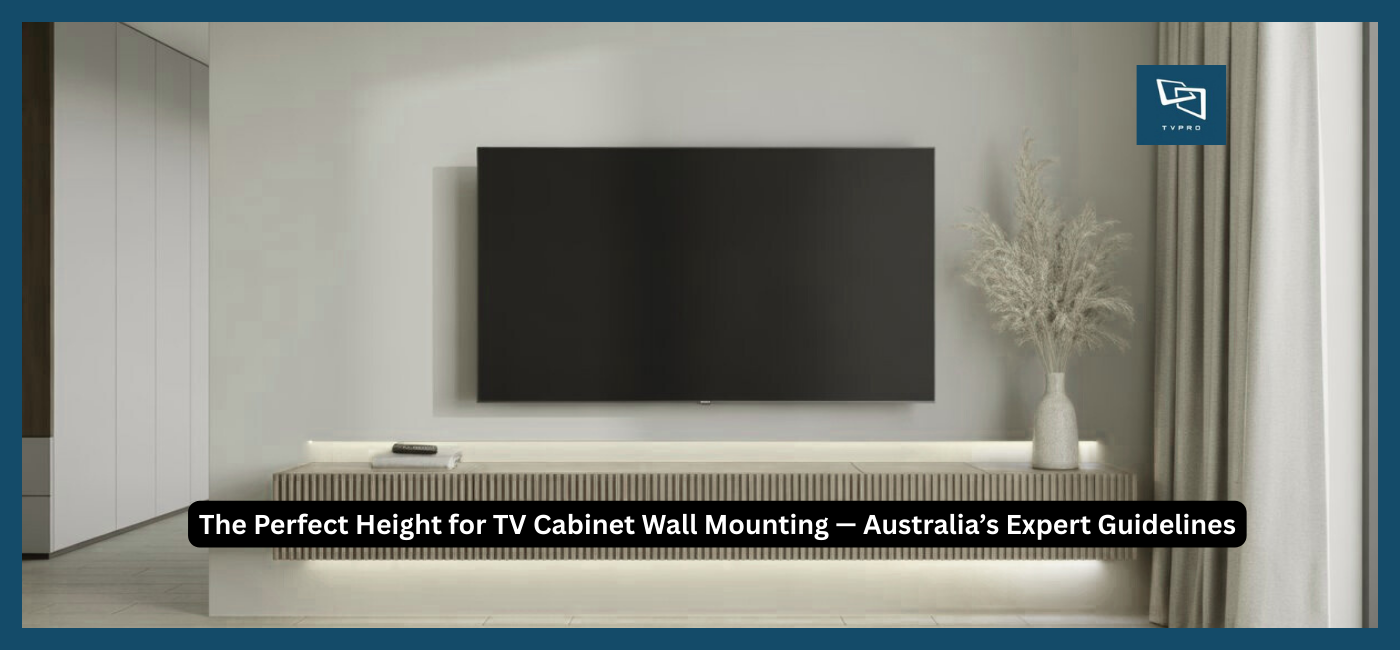
TV cabinet wall mounting may look simple, until you realise the height determines everything — the design, the comfort, the harmony, and the safety of your entertainment wall.
In 2026, floating TV cabinets (paired with wall-mounted TVs) have become a staple of Australian interior design, but one thing many homeowners get wrong is the installation height.
Mount it too low → The wall looks empty, the cabinet crowds the floor
Mount it too high → The cabinet looks disconnected from the TV
Mount it unevenly → The entire wall feels visually off
So what’s the perfect height?
Let’s break down the official Australian guidelines, professional installer recommendations, and interior design principles that guarantee a flawless finish every single time.
1. The Golden Rule: Mount the TV Cabinet 30–45 cm Above the Floor
This is the industry standard used by most Australian installers and interior designers.
Why this height works beautifully:
✔ Creates the perfect floating effect
✔ Keeps the cabinet visually balanced under the TV
✔ Leaves enough space to mop or clean under it
✔ Prevents the cabinet from feeling “too high”
✔ Works with most cabinet depths and TV sizes
30 cm (12 inches) = low minimalistic floating style
45 cm (18 inches) = practical, family-friendly height
This is the sweet spot that looks modern, clean, and natural in Australian homes.
2. TV Cabinet Wall Mounting & Proper TV Alignment
A floating cabinet doesn’t exist alone — it must complement the TV.
General rule:
Keep 15–25 cm of space between the cabinet top and the bottom of the TV.
This spacing ensures:
- Proper visual alignment
- Balanced design
- Ventilation for devices
- Comfortable viewing angles
Too much gap looks awkward.
Too little gap feels cramped.
The 15–25 cm range is the perfect visual harmony point.
3. Bedroom Setup Requires a Slightly Higher Mount
Bedrooms involve higher TV placement because people watch TV while lying down.
Bedroom floating cabinet height:
40–55 cm above the floor
Why higher works here:
✔ Bed footboard clearance
✔ Elevated eye-level angle
✔ Better cable routing behind the wall
✔ Comfortable viewing from an inclined position
Bedroom layouts demand a different mounting logic compared to living rooms.
4. Consider Australian Wall Types When Choosing Height
Wall strength is essential for safe TV cabinet wall mounting and ensures proper, secure installation.
Plasterboard walls:
✔ Mount into studs
✔ Reinforce behind the wall
✔ Ideal height: 30–45 cm from floor
Brick or concrete walls:
✔ Strong and stable
✔ More height flexibility
✔ Ideal height: 25–50 cm from floor
Metal stud walls:
✔ Must mount into metal studs
✔ Avoid ultra-low mounting
✔ Ideal height: 35–45 cm
Hebel walls:
✔ Requires correct anchors
✔ Avoid heavy cabinets
✔ Ideal height: 30–40 cm
Wall type determines safety — height must be adapted accordingly.
5. Factor in the Cabinet Depth and Length
Not all cabinets are equal. The depth, width, and weight impact the mounting height.
If the cabinet is deep (35–45 cm):
Mount slightly higher (35–45 cm from the floor)
If the cabinet is slim (20–28 cm):
Lower mounting (28–38 cm from floor) offers a sleeker look
If the cabinet is long:
It dominates the wall, so keep it lower
(around 30–40 cm)
If the cabinet is short:
Raise it to improve presence
(around 40–45 cm)
The visual weight of the cabinet must influence the height.
6. Consider the Viewing Distance and Sofa Height
Interior designers follow ergonomic guidelines for comfortable viewing.
Key factors:
- Sofa seat height (most Aussie sofas = 40–45 cm)
- Viewing distance (150–300 cm depending on TV size)
- TV centre height (optimal eye-level position = 106–112 cm)
How the cabinet ties into this:
The cabinet height should support a TV mount that positions the display at eye level.
If the cabinet is too high, the TV will sit awkwardly high.
If the cabinet is too low, the TV may sit too low.
Everything is interconnected.
7. For Home Theatre Rooms: Keep the Cabinet Lower
Home theatre setups prefer a more immersive, cinema-style layout.
Recommended height for theatre cabinets:
25–35 cm above the floor
Why lower works in media rooms:
✔ Bigger screens
✔ Recliner seating
✔ Lower viewing angles
✔ Clean horizontal sightline
Lower cabinets also allow LED lighting and acoustic panels to shine.
8. Don’t Forget Cable Management Zones
Cable routing plays a big role in choosing the correct height.
If you’re using in-wall cable concealment:
✔ Aim for 30–45 cm cabinet height
✔ Allows easy cable drop from TV to cabinet
If power point is behind the cabinet:
✔ Keep the cabinet 5–10 cm higher
✔ Allows plug clearance
If using conduits:
✔ Ensure the cabinet height aligns with conduit entry points
Ignoring these leads to messy wires and awkward installations.
9. Safety Guidelines for Homes With Kids & Pets
If your home has children or pets, cabinet height becomes even more important.
Do NOT mount the cabinet too low
Kids can climb on it, pull it, or bump into corners.
Ideal child-safe height:
35–45 cm above the floor
This keeps the cabinet out of reach while still maintaining a beautiful floating effect.
10. Professional Installers Use Laser Leveling for Precision
Mounting a floating cabinet by “eyeballing it” is the biggest DIY mistake.
Professionals use:
- Laser levels
- Stud locators
- Wall measuring systems
- Digital calibration tools
This ensures the cabinet is:
✔ Perfectly straight
✔ Perfectly aligned
✔ Perfectly spaced
✔ Perfectly balanced
Precision is everything in a modern entertainment wall.
Conclusion: Get the Height Right — Get the Aesthetic Perfect
Choosing the right TV cabinet wall mounting height is essential for a safe, stylish, and perfectly balanced living room setup. The perfect height ensures:
- Harmony between TV and cabinet
- Better cable management
- A modern floating look
- Safe installation
- Comfortable viewing
- A balanced aesthetic
For most Australian homes, 30–45 cm above the floor is the golden standard — but wall type, room layout, furniture height, and viewing angles all matter.
If you want the perfect floating cabinet look, the safest and smartest choice is to hire a professional. They’ll measure, align, and mount with precision so your space looks magazine-ready.