
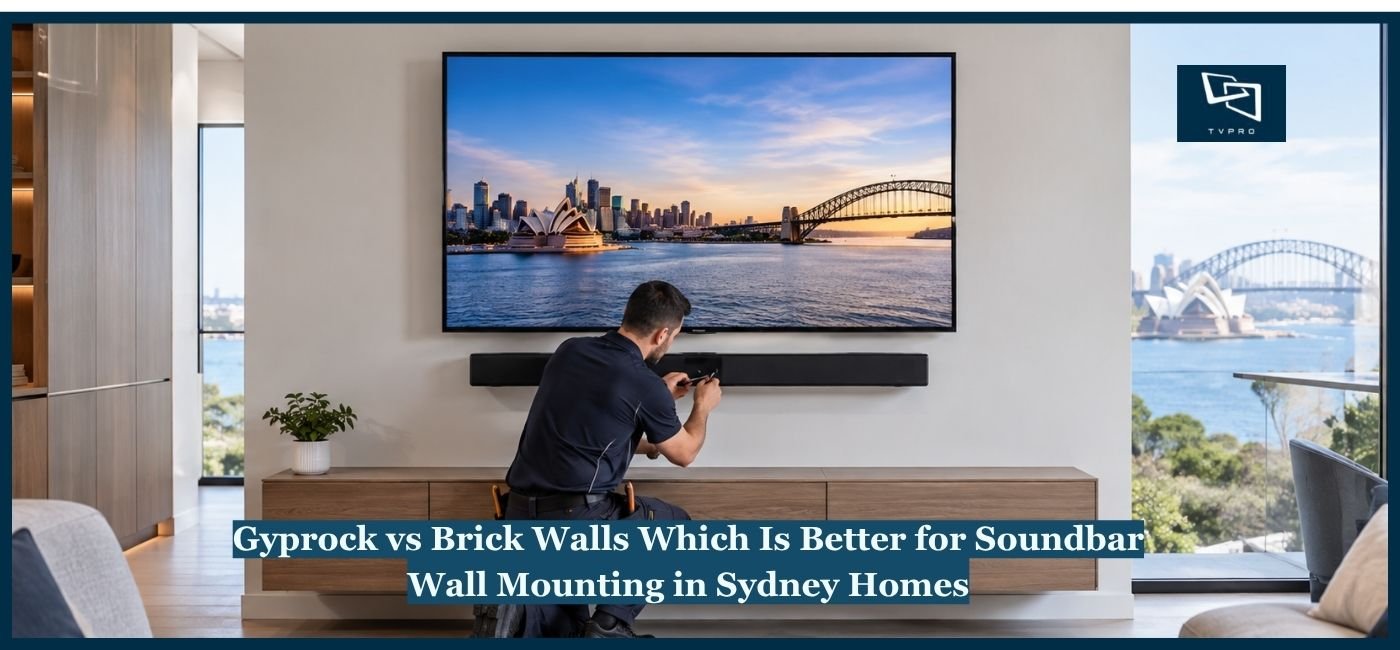
Choosing the right wall for soundbar installation can make a significant difference to stability, positioning and the overall finish of a home entertainment setup. In Sydney homes, two common wall types are gyprock and brick, and each requires a different approach when installing a wall-mounted soundbar.
A soundbar may be lighter than a television, but proper installation still requires consideration of the wall structure, mounting points, soundbar weight, bracket compatibility and cable routing. Simply drilling into the wall without identifying its construction can result in an unstable installation or unnecessary wall damage.
So, which is better for soundbar wall mounting: gyprock or brick? The answer depends on the construction of the wall and the installation requirements.
Soundbar Wall Mounting on Gyprock Walls
Gyprock, commonly used for internal walls and partitions, provides a clean and versatile surface for home entertainment installations. However, the plasterboard itself is not designed to support unlimited weight.
For a soundbar installation, the mounting hardware should be selected according to the wall construction and the location of the underlying studs or structural supports. Where suitable framing is available, fixing the bracket into the structural members can provide a more secure installation than relying solely on the plasterboard.
The position of the soundbar should also be considered in relation to the television. Mounting it too high, too low or too far from the TV can affect the visual appearance and listening experience.
Before drilling into a gyprock wall, an installer should also consider what may be behind the surface, including electrical wiring, plumbing and other services.
Soundbar Wall Mounting on Brick Walls
Brick walls generally provide a solid masonry surface for mounting a soundbar. When suitable masonry fixings and installation methods are used, brick can provide strong support for wall-mounted audio equipment.
However, brick installation still requires careful planning. The installer needs to select appropriate masonry fixings based on the brickwork and mounting bracket. The condition of the wall should also be assessed before installation.
Older Sydney properties may have different brickwork characteristics from newer homes, so the same fixing method may not be appropriate for every wall.
Drilling into brick can also create more dust and debris than installing into an internal gyprock wall. Proper positioning and drilling technique are therefore important for achieving a clean result.
Gyprock vs Brick for Soundbar Installation
Neither wall type is automatically better for every soundbar installation. The more important consideration is whether the mounting method is suitable for the specific wall.
| Factor | Gyprock | Brick |
| Wall structure | Usually requires locating suitable framing | Solid masonry surface |
| Fixing method | Stud or suitable plasterboard fixing | Appropriate masonry fixing |
| Installation difficulty | Depends on framing and wall construction | Depends on brick condition and access |
| Cable management | Often easier to conceal within suitable wall cavities | May require alternative cable routing |
| Dust during drilling | Generally lower | Generally higher |
| Flexibility | High for internal entertainment walls | Strong but requires accurate drilling |
This means a properly assessed gyprock wall can be suitable for soundbar mounting, while a brick wall can also provide a secure mounting surface when the correct hardware and technique are used.
What Should Be Checked Before Mounting a Soundbar?
The wall material is only one part of the installation. Several other factors should be checked before mounting.
Soundbar model and weight: Different soundbars have different mounting points, dimensions and bracket requirements.
Bracket compatibility: The bracket should be compatible with both the soundbar and the wall construction.
Mounting height: The soundbar should be positioned appropriately in relation to the TV and seating area.
Wall condition: Cracks, damaged plasterboard, loose brickwork or other structural concerns should be addressed before installation.
Cable management: HDMI, optical, power and other cables should be planned before the soundbar is mounted. A properly planned TV cable management solution can help maintain a cleaner entertainment area.
TV and soundbar alignment: A balanced arrangement can improve both the appearance of the entertainment area and the listening position. If the television is also being mounted, professional TV wall mounting services can help coordinate the TV and soundbar positions.
Why Professional Assessment Matters in Sydney Homes?
Sydney properties can vary considerably in construction, from modern apartments and renovated interiors to established brick homes. As a result, a soundbar mounting method that works on one wall may not be appropriate for another.
Professional installation involves assessing the wall, selecting suitable mounting hardware, positioning the soundbar and considering cable management before completing the installation.
For homeowners planning a complete entertainment-wall setup, related services such as TV cabinet wall mounting may also need to be considered when a floating cabinet is being installed below the television.
It is also useful to provide the installer with the soundbar brand and model before the appointment. This can help determine whether a manufacturer-specific bracket or another compatible mounting solution is required.
For homeowners who are unsure whether their wall is gyprock, brick or another construction type, professional assessment can help reduce the risk of selecting unsuitable fixings.
Conclusion
Both gyprock and brick walls can be suitable for soundbar wall mounting in Sydney homes, provided the installation method matches the wall construction and soundbar requirements.
Gyprock installations generally require careful attention to studs, framing and suitable fixings, while brick installations require appropriate masonry hardware and accurate drilling. In both cases, bracket compatibility, soundbar weight, positioning and cable management should be considered before installation.
The right approach is therefore not simply choosing between gyprock and brick. It is choosing the correct mounting method for the specific wall and soundbar.
For homeowners planning a new soundbar installation, checking the wall construction and soundbar model before mounting can help achieve a secure, aligned and professionally finished entertainment setup.
Frequently Asked Questions
Can a soundbar be mounted on a gyprock wall?
Yes. A soundbar can be mounted on gyprock when suitable fixing methods are used. Where possible, the mounting bracket should be secured to appropriate structural framing or studs rather than relying only on the plasterboard surface.
Is brick better than gyprock for soundbar mounting?
Brick can provide a solid mounting surface, but it is not automatically better for every installation. The suitability depends on the wall condition, soundbar weight, bracket and appropriate fixing method.
Do I need a special bracket for a wall-mounted soundbar?
Some soundbars use specific mounting points or manufacturer-recommended brackets. Checking the soundbar brand and model before installation helps determine which bracket or mounting solution is appropriate.
Can cables be hidden when mounting a soundbar?
Cable management options depend on the wall construction and the property. Gyprock walls may provide suitable internal cavity options, while brick walls may require alternative cable-routing methods.
Should I mount the soundbar before or after the TV?
The TV and soundbar positions should ideally be planned together. This helps achieve appropriate spacing, alignment and cable routing between the two components.
What information should I provide before booking soundbar installation?
Providing the soundbar brand and model, wall type if known, TV size and any cable-management requirements can help an installer prepare the appropriate mounting solution. Homeowners can also consider soundbar wall mounting and installation when professional assistance is required.